Leg pain that travels from the lower back through the hip and down toward the foot is commonly called sciatica – but not all sciatic-pattern pain originates from the same place. Piriformis syndrome produces nearly identical symptoms through a completely different mechanism, and treating the wrong cause explains why so many people get partial relief but never fully resolve their leg pain. At The Chiropractic Place in Montrose, correctly identifying the source is the starting point for care that actually works.
What Sciatica Actually Is
True sciatica – more precisely called lumbar radiculopathy – occurs when the sciatic nerve is compressed or irritated at its origin in the lumbar spine. The sciatic nerve is the largest nerve in the body, formed by nerve roots that exit the spine at the L4, L5, and S1 vertebral levels before traveling through the hip and down the leg.
When a herniated disc, bone spur, or spinal stenosis compresses one of those nerve roots, the pain, tingling, or numbness follows the nerve’s path – typically through the buttock, down the back of the thigh, and into the calf or foot. The defining characteristic of true sciatica is that it originates in the spine. The lumbar vertebrae are where the problem starts.
What Piriformis Syndrome Is
The piriformis is a small muscle deep in the buttock that runs from the sacrum to the top of the femur. In most people, the sciatic nerve passes below or through this muscle on its way down the leg. When the piriformis becomes tight, inflamed, or goes into spasm, it can compress or irritate the sciatic nerve from the outside – producing symptoms that feel nearly identical to lumbar radiculopathy.
The distinction is the location of compression. In piriformis syndrome, the problem is in the buttock, not the spine. The nerve itself is being squeezed by a tight muscle rather than by a disc or bone spur at its spinal origin.
How to Tell the Difference – and Why It Matters
From the patient’s perspective, the pain can feel almost identical – a radiating ache, burning, or tingling down the leg that’s worse with sitting and sometimes relieved by movement. The differences are subtle but diagnostically important.
Indicators of True Lumbar Sciatica
Lumbar sciatica tends to be associated with lower back pain alongside the leg symptoms – though not always. It’s often worsened by activities that load the lumbar spine: prolonged sitting, bending forward, coughing, or sneezing. Neurological signs – weakness in specific muscle groups, reduced reflexes, or altered sensation in a specific dermatomal pattern – point toward lumbar nerve root involvement.
Imaging findings like a herniated disc at L4-L5 or L5-S1 that correlates with the symptom pattern support a lumbar diagnosis.
Indicators of Piriformis Syndrome
Piriformis syndrome tends to produce symptoms most prominently with prolonged sitting – particularly on hard surfaces – and with activities that involve hip rotation. There’s often a deep, tender spot in the buttock that’s exquisitely painful to direct pressure. The lower back itself may not be particularly symptomatic.
Stretching the piriformis specifically – bringing the knee toward the opposite shoulder while lying down – often reproduces or temporarily relieves the symptoms, which helps confirm the muscle’s involvement.
Why the Distinction Matters Clinically
Treatment aimed at the lumbar spine won’t resolve piriformis syndrome, and treatment aimed exclusively at the piriformis won’t resolve a herniated disc compressing an L5 nerve root. Many patients who’ve been stretching their piriformis for months without full resolution actually have a lumbar component that’s driving the nerve irritation – or vice versa.
In practice, the two conditions also coexist frequently. A lumbar misalignment can alter pelvic mechanics in ways that create piriformis tension, and a chronically tight piriformis can affect sacral and lumbar positioning. Addressing only one when both are present explains a lot of incomplete recoveries.
How We Evaluate Leg Pain at The Chiropractic Place
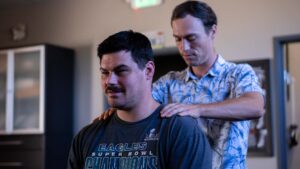
When a patient comes in with sciatica or sciatic-pattern leg pain in Montrose, the evaluation is thorough. Dr. Brian Miller, DC, CCWP, FICPA, and Dr. Riley Miller, DC, assess lumbar alignment, disc space integrity, neurological function, sacroiliac joint mechanics, and direct palpation of the piriformis and surrounding musculature.
When X-rays are appropriate – which is often the case when significant or persistent leg pain is involved – they give us a clear picture of lumbar alignment and disc spacing. That information, combined with the orthopedic and neurological examination findings, allows us to identify whether the source is spinal, muscular, or both.
That diagnostic precision shapes the care plan. A patient with a lumbar disc component needs chiropractic adjustments targeted at the affected vertebral levels. A patient with primarily piriformis involvement needs soft tissue work and possibly a different adjustment focus through the sacrum and pelvis. Most patients need some combination.
What Treatment Looks Like for Each
For Lumbar Sciatica
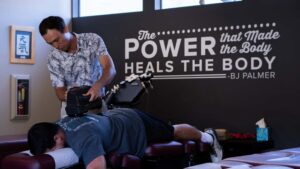
Chiropractic adjustments to the lumbar spine restore proper alignment and reduce the nerve root compression that’s driving the leg symptoms. As the disc pressure decreases and the vertebrae move more freely, the inflammatory response around the nerve root settles and symptoms improve progressively. Cold laser therapy can reduce inflammation around the nerve root directly, speeding that process for patients with more acute presentations.
For Piriformis Syndrome
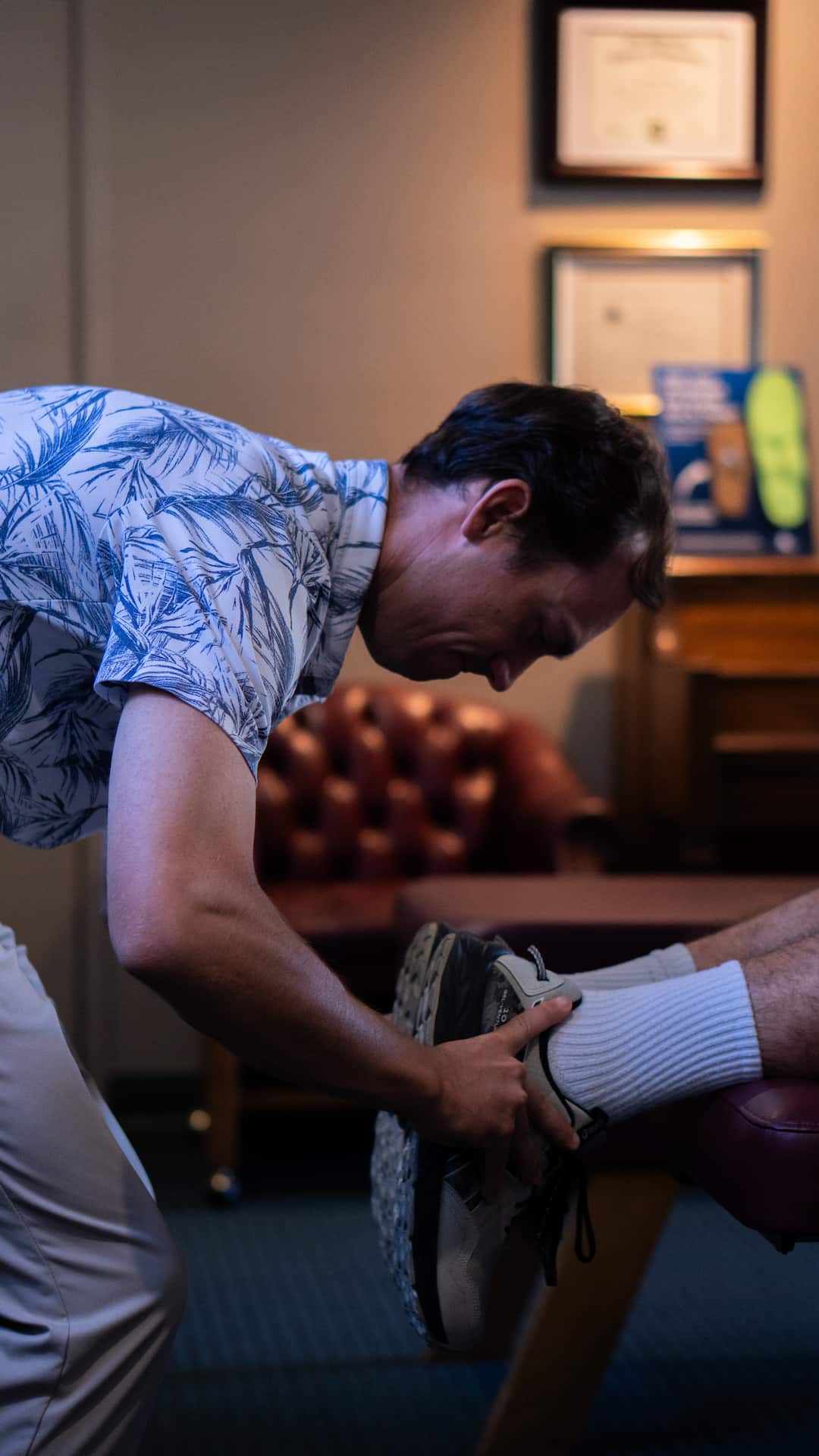
Soft tissue work targeting the piriformis – combined with adjustments to the sacrum and pelvis that address the mechanical factors contributing to piriformis tension – is the primary approach. Stretching is helpful as a home component, but stretching alone rarely resolves piriformis syndrome when there’s a structural driver maintaining the muscle’s dysfunction.
Getting an Accurate Diagnosis in La Crescenta and Montrose
If you’ve been dealing with leg pain that travels from the hip downward – whether it was diagnosed as sciatica, piriformis syndrome, or nothing at all – and it hasn’t fully resolved, it’s worth getting a fresh evaluation that looks at the whole picture.
The Chiropractic Place has been serving La Crescenta, Montrose, La Cañada, and the surrounding Crescenta Valley for over 40 years. Call us at (818) 249-2300 or visit our contact page to schedule. New patients can take advantage of our new patient special to get a thorough evaluation and first adjustment.